

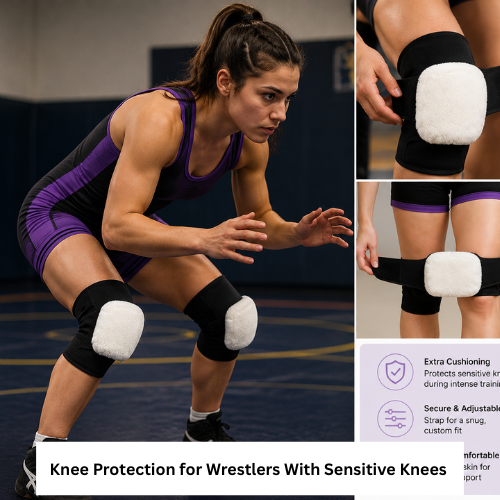
Choosing knee protection for wrestlers with sensitive knees requires a balance of padding, fit, mobility, skin comfort, and secure placement. A soft pad may still pinch behind the knee, slide during sprawls, or press on an irritated area.
Knee pads can reduce contact and friction, but they do not diagnose or treat pain. Wrestlers with swelling, instability, numbness, recent injury, or persistent discomfort should speak with a qualified sports medicine professional before returning to full training.
| Protection style | Best use | Main benefit | What to verify |
| Traditional wrestling knee pad | Direct kneecap coverage | Focused impact and mat protection | Pad position, rear opening, and strap pressure |
| Padded compression sleeve | Flexible drills and repeated movement | Broader coverage with fewer hard edges | Compression level, sleeve length, and grip |
| Low profile pad | Athletes who dislike bulk | Easier bending and faster movement | Padding thickness and coverage area |
| Open back pad | Wrestlers sensitive behind the knee | Less material in the knee crease | Edge rubbing and pad stability |
| High coverage sleeve | Kneecap and surrounding tissue protection | Larger contact area | Heat, mobility, and uniform compatibility |
Compare Padding Without Adding Excess Bulk
Padding should cover the kneecap during standing, shots, sprawls, and bottom position. Thick padding may absorb more contact but can change knee flexion or catch during movement.
The ScrapLife Defender padded knee sleeve may suit wrestlers who prefer compression based coverage, but buyers should verify the size chart, pad placement, sleeve length, materials, and washing instructions.
Test the pad during controlled stance changes before hard drilling. It should stay centered without forcing the wrestler to repeatedly pull it up.
Check Pressure Around Sensitive Areas
The bands should feel secure without deep marks, numbness, or tingling. An open back design may reduce bunching for some athletes, while others may prefer a complete sleeve.
The Matman Neoprene Air wrestling knee pad offers a focused wrestling design to compare, although athletes should confirm rear opening comfort, padding shape, ventilation, sizing, and skin compatibility.
Do not wear a pad over broken skin, an untreated rash, or an open wound. Follow team hygiene rules and medical guidance.
Compare Cushioning and Mobility
A sensitive knee may need protection around the kneecap without excessive stiffness. Bend, squat, kneel, and perform slow penetration steps while checking whether the pad moves or limits range.
The RUDIS Cushion wrestling knee pad can be reviewed for cushioning and wrestling movement, but buyers should verify current dimensions, fit guidance, materials, coverage, and care requirements.
Knee protection for wrestlers should work with approved singlets, braces, or tape. Do not stack products when combined pressure or slipping has not been evaluated.
Consider Youth and Adult Compression Options
The Fireclub padded compression knee sleeves may provide a flexible option for different age groups, but buyers should confirm the correct size, compression feel, pad thickness, anti slip design, and sport suitability.
Youth athletes should be fitted by an adult and rechecked as they grow. A sleeve that was comfortable earlier in the season may become too tight.
Setup and Practice Testing
Wash new gear when the care label recommends it and inspect seams before use. Put the pad on dry skin, center the cushioning, and smooth wrinkles away from the knee crease.
Use the first session for controlled drilling. Stop if the pad causes sharp pain, numbness, circulation changes, or skin irritation.
Troubleshooting Common Fit Problems
If the pad slides, recheck sizing, leg placement, fabric grip, and whether sweat or lotion is reducing friction. If the sleeve rolls, it may be too small, too large, or incompatible with the athletes leg shape.
If the padding shifts away from the kneecap, stop using it during live wrestling until the fit is corrected. Replace gear with compressed foam, torn fabric, exposed seams, or weakened elastic.
Cleaning and Maintenance
Follow the label for washing temperature, detergent, drying, and whether pads can be machine washed. Air out gear immediately after practice and do not leave damp pads sealed in a bag.
Inspect the pad after every wash. Heat and harsh chemicals can damage foam, elastic, coatings, or grip material.
Common Buying Mistakes
Avoid buying only by age, height, or clothing size. Other mistakes include choosing maximum padding without testing mobility, ignoring rear knee comfort, and keeping a worn pad because the outer fabric still looks usable.
Shoppers can review a RUDIS impact resistant wrestling knee pad listing as an external comparison, then verify sizing, padding, materials, seller details, warranty, and return terms.
Sensitive Knee Protection Buying Checklist
Use this knee protection for wrestlers checklist before ordering.
- Measure both legs according to the brand instructions.
- Check kneecap coverage, rear knee comfort, and sleeve length.
- Compare padding, compression, flexibility, and heat buildup.
- Confirm compatibility with approved braces, tape, and uniforms.
- Review skin safety, washing, drying, and hygiene needs.
- Inspect seams, elastic, foam recovery, and anti slip areas.
- Check replacement options, warranty, return policy, delivery, and support.
- Verify before buying when sizing or materials are unclear.
Conclusion
The best knee protection for wrestlers with sensitive knees should stay centered, reduce direct mat contact, and allow natural movement without painful pressure. Wrestling knee pads offers focused pads and sleeves for athletes comparing cushioning, compression, and fit.
FAQ
Can knee pads fix wrestling knee pain?
No. They may reduce contact, but ongoing pain, swelling, or instability needs professional assessment.
Should a wrestling knee pad feel tight?
It should stay secure without numbness, deep marks, restricted movement, or circulation changes.
Is a sleeve better than a traditional pad?
It depends on the athletes sensitivity, desired coverage, heat tolerance, and movement needs.
How often should wrestling knee pads be washed?
Follow the care label and team hygiene rules. Air them out after every use and wash them regularly.
