

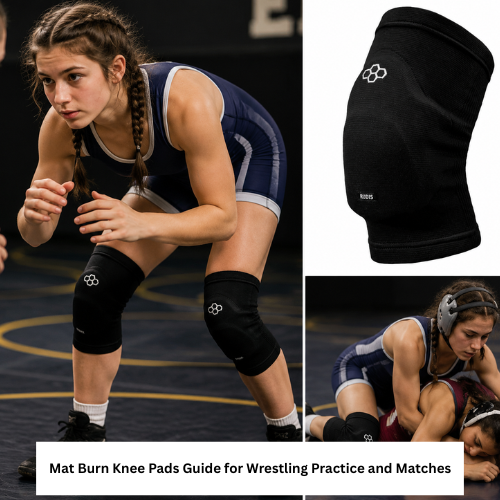
Choosing mat burn knee pads means looking for enough surface coverage to reduce friction without creating a bulky pad that shifts during shots, sprawls, standups, or scrambles. Mat burn can occur when skin repeatedly slides against the mat, especially during long practices or high volume drilling.
Protective gear cannot replace clean mats, proper technique, covered skin wounds, or medical care. Wrestlers should tell a coach or athletic trainer about broken skin, infection signs, serious bruising, or pain that changes normal movement.
How to Choose Mat Burn Knee Pads
The pad should cover the front and sides of the knee areas that repeatedly contact the mat. Measure according to the brand chart and test both flexion and extension before live practice.
| Pad feature | Why it matters | Possible drawback | What to verify |
| Broad fabric coverage | Reduces exposed skin during sliding | Can increase heat | Sleeve length and breathability |
| Centered foam pad | Helps with direct kneecap contact | May shift if sizing is wrong | Pad shape and anti slip design |
| Smooth outer surface | May move across the mat more cleanly | Can wear with repeated friction | Seam placement and fabric durability |
| Open back design | Reduces material behind the knee | Less full sleeve coverage | Edge comfort and stability |
| Compression sleeve | Supports close fit and broad coverage | Can feel tight or roll | Compression, grip, and sizing |
Compare Mat Surface Coverage
A pad should remain over the kneecap when the wrestler drops levels and returns to stance. Check whether the lower and side fabric covers the areas that usually become red or scraped.
The RUDIS Resistant black wrestling knee pad can be compared for wrestling specific coverage, but buyers should verify sizing, outer fabric, padding position, mobility, and washing guidance.
Do not train with uncovered open mat burns. Follow the team, school, tournament, and medical rules for wound coverage and participation.
Review Traditional Wrestling Pads
The Adidas AK100 wrestling kneepad may suit athletes who prefer a standard pad shape, although buyers should confirm current sizing, rear opening, foam coverage, fabric durability, and care instructions.
Traditional pads should bend without cutting into the back of the leg. Check the upper and lower edges after several minutes of movement.
Check Size Options and Fit Security
The Adidas wrestling kneepad large provides another size based option to compare, but athletes should verify the actual measurement range, pad location, sleeve tension, and return conditions before buying.
Mat burn knee pads that are too loose can rotate and expose skin. Pads that are too tight may roll, pinch, or affect circulation.
Compare Impact and Friction Protection
Bruise protection and mat burn protection are related but not identical. Foam can help with impact, while the sleeve fabric and coverage help reduce exposed skin during sliding.
The RUDIS Impact wrestling knee pad may support athletes comparing impact focused designs, but buyers should verify coverage, thickness, flexibility, materials, and whether the pad suits practice and competition rules.
Setup and Compatibility
Wear the pad directly against clean dry skin unless the manufacturer instructs otherwise. Smooth wrinkles and center the pad before putting on warmups or a singlet.
Check compatibility with braces or tape approved by a medical professional. Layering too many items can cause pressure, slipping, or heat buildup.
Troubleshooting Mat Burn and Bruising
If burns occur above or below the pad, review sleeve length and movement rather than simply tightening it. If the pad slides, check size, elastic condition, and placement.
If bruising continues despite correct padding, discuss technique, training load, mat condition, and medical concerns with the coach or athletic trainer. Stop activity after a significant injury.
Cleaning and Hygiene
Wash pads according to the label and dry them fully. Damp gear can develop odor and may contribute to skin problems.
Never share unwashed knee pads. Keep damaged skin covered according to medical and competition guidance, and clean personal gear separately from dirty shoes.
Common Buying Mistakes
Avoid choosing by color or brand alone, buying a loose size for growth, or assuming thick foam provides complete mat burn coverage. Other mistakes include ignoring seam placement and continuing to use pads with rough fabric or flattened cushioning.
Shoppers can review an ASICS competition kneepad listing as an external comparison, then verify current sizing, padding, materials, seller details, warranty, and return terms.
Mat Protection Buying Checklist
Use this mat burn knee pads checklist before ordering.
- Measure the leg according to the current brand chart.
- Check front, side, upper, and lower coverage.
- Compare foam impact protection with sleeve friction coverage.
- Test bending, shots, sprawls, and standups.
- Confirm competition, uniform, brace, and tape compatibility.
- Review washing, drying, skin hygiene, and replacement needs.
- Check seams, elastic, foam, warranty, return policy, delivery, and support.
- Verify before buying when sizing or materials are unclear.
Conclusion
Reliable mat burn knee pads should cover the common contact zones, remain centered during wrestling movement, and provide useful cushioning without unsafe pressure. Wrestling knee pads offers several traditional and impact focused options for practice and matches.
FAQ
Do knee pads completely prevent mat burn?
No. They can reduce exposed skin and friction, but fit, technique, mat condition, and hygiene also matter.
Can a wrestler practice with an open mat burn?
Follow medical, team, and competition rules. Open or infected skin may require treatment and removal from practice.
Are thicker pads always better for bruising?
No. Padding must also stay centered, allow movement, and fit without excessive pressure.
When should a wrestling knee pad be replaced?
Replace it when foam stays compressed, elastic loosens, seams open, or the fabric becomes rough or torn.
