

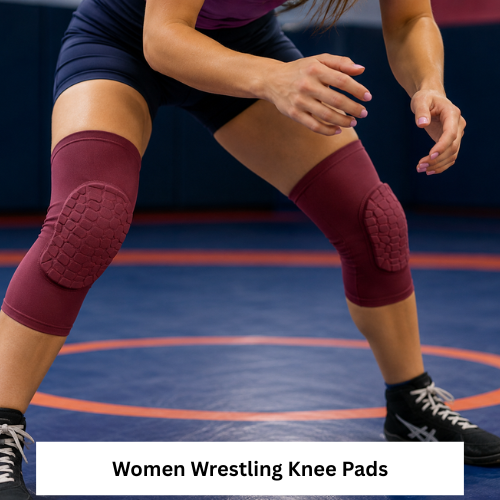
The best women wrestling knee pads should match the athlete’s leg circumference, knee shape, training intensity, and preferred sleeve length rather than relying only on a general women’s size label. A secure pad should stay centered during stance, shots, kneeling, and scrambles without causing pressure, rolling, or restricted circulation.
Female wrestlers may use dedicated wrestling pads, compression knee sleeves, or multi-sport padded protection. The correct choice depends on mat contact, leg shape, heat tolerance, practice frequency, and whether one or both knees need coverage.
Wrestling knee pads shoppers should verify the exact size chart, material, padding location, package quantity, wash instructions, and return terms before purchasing.
How to Fit Women Wrestling Knee Pads
Women wrestling knee pads should follow the athlete’s measurements, not gender labels alone.
Use a flexible tape to measure the location specified by the manufacturer, which may be:
- Around the kneecap
- Above the knee
- Below the knee
- Around the calf
- Around the lower thigh
Measure both legs and use the larger result when the chart recommends it.
A women’s wrestling protection category can help athletes compare products intended for women, but each model still requires an individual fit check.
| Style | Best suited to | Main advantage | Possible limitation | What to verify |
| Low-profile wrestling pad | Competition-style movement | Minimal bulk | Limited surrounding coverage | Pad position |
| Padded compression sleeve | Regular practice | Combines cushioning and sleeve support | May retain heat | Sleeve tension |
| Long leg sleeve | Additional skin coverage | Reduces direct mat friction | Can roll at the thigh | Length and grip |
| Neoprene kneepad | Athletes wanting firm compression | Secure and warm | Less breathable | Material comfort |
| Gel pad | Repeated knee contact | Flexible cushioning | Gel may shift in poor construction | Gel attachment |
Leg Shape and Size Selection
Two athletes with the same height and body weight may need different sizes because calf, knee, and thigh proportions vary.
Check whether the sleeve opening sits on:
- A straight section of the leg
- A tapered calf
- A wider lower thigh
- An area affected by muscle definition
A top band positioned on a sharply tapered area may slide more easily.
An adult women’s knee pad product may provide a general size range, but verify the exact measurement points, sleeve length, padding width, and quantity.
Do not choose a smaller size only to prevent slipping. Excessive tightness can create discomfort and circulation concerns.
Sleeve Length and Comfort
Short sleeves may feel cooler and reduce fabric bunching.
Long sleeves may offer:
- More skin coverage
- Additional compression
- Reduced mat friction
- Greater stability over the calf
However, they may also:
- Hold more heat
- Roll at the top
- Feel tight around the thigh
- Take longer to dry
- Interfere with tights or singlets
A women’s padded compression knee sleeve may suit athletes who want cushioning with extended coverage, but the sleeve should be tested through full wrestling movement.
Padding Placement
The protective section must remain over the kneecap while standing, bending, and kneeling.
Check the pad in:
- Neutral stance
- Deep stance
- Penetration step
- Kneeling position
- Sprawl
- Stand-up movement
- Controlled scramble
A pad that shifts to the side may not match the knee shape or sleeve tension.
The padding should not form a hard crease behind the knee.
Comfort Behind the Knee
Bunching behind the joint is a common fit problem.
Inspect:
- Rear seam placement
- Fabric thickness
- Sleeve length
- Flex panels
- Pad edge location
- Wrinkles when bent
The back of the sleeve should remain smooth enough for deep flexion.
Stop using the product when it creates pinching, numbness, skin abrasion, or persistent pressure.
Padding Thickness for Practice
Thicker padding may feel comfortable during frequent kneeling but can increase heat and bulk.
Lower-profile pads may support faster movement but provide less cushioning.
Consider:
- Practice frequency
- Mat surface
- Amount of drilling
- Previous skin irritation
- Typical lead leg
- Need for one or two pads
- Heat tolerance
- Competition use
Comfortable knee pads should protect the intended area without changing normal wrestling mechanics.
Women’s Gear and Uniform Compatibility
Check fit with:
- Wrestling singlets
- Compression leggings
- Practice shorts
- Spats
- Team uniforms
- Other protective equipment
The sleeve should not create a thick ridge beneath tight clothing or expose hard components.
A wrestling protector gear for women category can help athletes compare related mat-protection options without forcing a product intended for a different body area.
Confirm team and competition rules before using unusual colors, extra-long sleeves, or visible external components.
One Knee or Both Knees
Some female wrestlers protect the lead knee or the knee that contacts the mat most frequently.
Others prefer a pair for balanced feel.
Consider:
- Stance
- Technique
- Prior irritation
- Practice drills
- Coach guidance
- Personal comfort
- Package quantity
Verify whether the product listing includes one sleeve or two.
First Fit Test
Test new women wrestling knee pads before full-intensity practice.
Complete:
- Several deep squats
- Stance movement
- Penetration steps
- Controlled kneeling
- Sprawls
- Stand-ups
- Light partner drilling
- A short rest period
Then check:
- Pad position
- Sleeve movement
- Skin pressure
- Heat
- Circulation
- Seam irritation
The black wrestling compression knee sleeves listing can help shoppers compare a padded sleeve design, but verify current sizing, quantity, material, padding, seller, and package contents.
Safety and Injury Support
Knee pads are designed mainly for impact and surface protection. They should not be treated as medical treatment.
Seek suitable professional guidance when experiencing:
- Swelling
- Instability
- Locking
- Sharp pain
- Loss of motion
- Persistent bruising
- Numbness
- A recent injury
A padded sleeve should not replace a brace prescribed by a healthcare professional.
Common Buying Mistakes
Buying by Women’s Label Alone
The size chart and leg measurements matter more than the marketing category.
Choosing Excessive Compression
A very tight sleeve may stay in place but cause discomfort or circulation concerns.
Ignoring Thigh and Calf Proportions
A sleeve can fit at the knee but roll or pinch at its openings.
Ordering Thick Padding for Every Session
Bulkier pads may not suit fast technique work or competition.
Assuming a Pair Is Included
Many wrestling pads are sold individually.
Testing Only While Standing
The pad must be checked in deep wrestling positions.
Troubleshooting Fit Problems
The Sleeve Slides Down
Review the size, upper opening, leg taper, sweat, and grip-band condition.
The Top Edge Rolls
The sleeve may be too long, too tight, or positioned on a changing leg circumference.
The Pad Rotates
Check sleeve tension and whether the padding shape matches the kneecap.
The Back Pinches
Smooth the fabric and test a different sleeve length or seam design.
Skin Becomes Irritated
Stop use, wash according to instructions, inspect the material, and avoid wearing damaged gear.
Conclusion
Women wrestling knee pads should be selected through accurate leg measurements, full-motion testing, and attention to sleeve length, padding location, heat, and skin comfort. The best fit remains centered during mat movement without rolling, pinching, or restricting circulation.
FAQ
Are women’s wrestling knee pads sized differently?
Some products use women-specific charts, while others use unisex sizing. Always follow the exact measurements.
Should women choose long or short knee sleeves?
Short sleeves may feel cooler, while long sleeves provide more skin coverage. Fit and movement should guide the choice.
How do I stop a knee pad from sliding?
Check the size, upper sleeve position, grip band, leg shape, and whether the elastic has worn out.
Can wrestling knee pads be worn over leggings?
Some can, but the surface may affect grip. Test the full setup during controlled movement.
Do women need pads on both knees?
Not always. The choice depends on stance, mat contact, coach guidance, and personal preference.
