

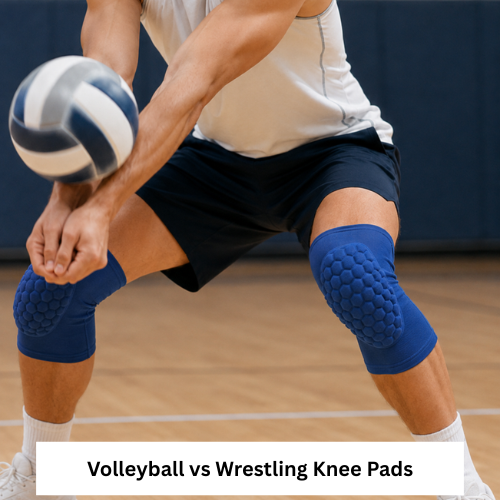
Understanding volleyball vs wrestling knee pads helps athletes choose protection designed for the movements, surfaces, and impact patterns of their sport. Volleyball pads are commonly shaped for repeated floor contact during dives, while wrestling pads must stay secure through shots, scrambles, mat pressure, and contact with an opponent.
The two styles may look similar, but padding position, sleeve tension, coverage, flexibility, and overall profile can differ. A pad that feels comfortable during volleyball practice may shift, bunch, or restrict movement during wrestling.
Shoppers using wrestling knee pads should compare the actual sport, fit chart, pad shape, sleeve length, material, care instructions, and return policy rather than choosing by appearance alone.
How Volleyball vs Wrestling Knee Pads Differ
The main volleyball vs wrestling knee pads difference is how the protective padding is shaped and secured for each sport.
Volleyball knee pads generally focus on:
- Front-of-knee impact during diving
- Cushioning against a hard court
- Freedom for jumping and lateral movement
- Short or medium sleeve coverage
- Lightweight construction
Wrestling knee pads generally focus on:
- Repeated contact with a wrestling mat
- Staying in place during kneeling and takedowns
- Low-profile movement under pressure
- Protection around the kneecap
- Flexible sleeve compression
- Reduced catching during scrambles
A guide to volleyball-style knee pads for wrestling can help athletes understand when a court-style pad may or may not provide suitable mat protection.
| Buying factor | Volleyball knee pads | Wrestling knee pads | What to verify |
| Main impact area | Front of knee during dives | Kneecap and surrounding area during mat contact | Pad position |
| Surface | Hard indoor court | Wrestling mat | Material and friction |
| Padding profile | Often broader and thicker | Often compact and contoured | Mobility and bulk |
| Sleeve tension | Designed for jumping and court movement | Designed for shots, kneeling, and scrambles | Anti-slip fit |
| Coverage | Frequently short or medium | Short, medium, or extended sleeve | Team and personal preference |
Padding Shape and Placement
Knee pad padding should remain centered over the kneecap when the athlete bends, shoots, sprawls, and returns to stance.
Volleyball padding may cover a broad front section because athletes commonly contact the court during dives. Wrestling padding may be more sculpted to reduce bulk during kneeling and close contact.
Check whether the pad:
- Covers the kneecap fully
- Extends slightly around the sides
- Folds naturally with the knee
- Creates pressure behind the joint
- Moves when the athlete drops into stance
- Leaves gaps when fully bent
More padding is not automatically better. Excessive bulk may interfere with movement or allow the pad to rotate.
Fit and Sleeve Tension
A wrestling pad must stay secure without restricting circulation.
Measure the leg using the brand’s instructions, which may require circumference above, below, or directly around the knee.
The sleeve should:
- Feel secure but not painful
- Stay centered during repeated movement
- Avoid rolling at the top or bottom
- Allow full knee flexion
- Avoid numbness or tingling
- Leave no deep pressure marks
A wrestling knee pad size chart can help athletes organize measurements, but the exact brand chart must still be checked before ordering.
Do not assume the same listed size fits equally across volleyball and wrestling products.
Low-Profile Versus Thick Padding
Low-profile mat sports knee pads can feel less restrictive and may reduce interference during fast movement.
Thicker padding may provide more cushioning, but it can:
- Add heat
- Hold more moisture
- Shift during contact
- Create extra pressure
- Take longer to dry
- Feel bulky under training gear
Choose the lowest profile that provides suitable comfort for the athlete’s practice needs.
A wrestling knee sleeve with padding may offer a balanced option when the athlete wants compression-style coverage with a defined front pad.
Material and Build Quality
Common construction may include stretch fabric, synthetic sleeves, foam, gel, elastic, mesh, and reinforced stitching.
Inspect:
- Seam placement
- Padding attachment
- Sleeve elasticity
- Interior texture
- Edge binding
- Ventilation panels
- Grip bands
- Fabric thickness
Verify before buying if a specific foam, gel, antimicrobial treatment, or moisture-control feature matters.
Loose stitching, uneven padding, hard interior edges, or exposed adhesive can cause discomfort during repeated practice.
Can Volleyball Pads Be Used for Wrestling?
Some athletes may use volleyball pads for light mat training, but suitability depends on fit, thickness, surface behavior, and movement.
A volleyball knee pad for multi-sport use may appear suitable for several activities, but verify that it remains secure during wrestling-specific drills.
Test the pad before full practice:
- Perform several stance changes.
- Complete controlled shots.
- Kneel and stand repeatedly.
- Move through a light scramble.
- Check pad rotation.
- Inspect skin pressure.
- Ask a coach to observe fit.
Stop using it when it slides, bunches, catches, or limits movement.
Setup Before Practice
Before wearing a new pad:
- Check the size label.
- Inspect the sleeve and stitching.
- Confirm the padding is centered.
- Remove jewelry from the leg area.
- Pull the sleeve on without twisting it.
- Bend and straighten the knee.
- Perform controlled stance movements.
- Check circulation.
- Confirm the pad meets team rules.
The Under Armour volleyball kneepads listing can help buyers compare a court-oriented design, but verify its current sizing, padding, quantity, materials, seller, and package contents.
Common Buying Mistakes
Choosing by Sport Label Alone
Products within the same sport category can have different padding, length, and fit.
Buying Excessively Thick Padding
Bulk may interfere with stance, shots, and scrambles.
Ignoring Sleeve Length
A longer sleeve may feel secure but can also retain more heat.
Assuming One-Size Fits All
Leg shape and circumference vary significantly between athletes.
Forgetting Package Quantity
Some wrestling pads are sold singly, while volleyball products may be sold in pairs.
Keeping a Pad That Slides
Movement during a short fit test usually becomes worse during sweaty practice.
Troubleshooting Fit Problems
The Pad Slides Down
Check the size, sleeve elasticity, skin moisture, grip band, and whether the pad is positioned correctly.
The Pad Rotates Sideways
The sleeve may be too loose, the padding too heavy, or the athlete between sizes.
The Sleeve Rolls
Check circumference, sleeve length, and whether the upper opening sits on a tapered part of the leg.
The Knee Feels Numb
Remove the pad immediately. The fit may be too tight or pressure may be concentrated around the joint.
The Pad Catches on the Mat
Inspect the exterior fabric, seams, and bulky edges. A lower-profile wrestling design may be more suitable.
Cleaning and Maintenance
Follow the product care label.
General care may include:
- Airing the pad after practice
- Closing hook-and-loop parts when present
- Washing with similar sports gear
- Using the approved water temperature
- Avoiding unapproved bleach
- Air-drying when required
- Reshaping padding while damp
- Inspecting seams after washing
Do not store a damp knee pad inside a closed gear bag.
Replace it when the sleeve remains loose, padding shifts permanently, seams separate, or the exterior becomes damaged.
Conclusion
The volleyball vs wrestling knee pads choice should be based on movement, surface, padding position, and secure fit rather than appearance alone. Volleyball pads are shaped mainly for court dives, while wrestling pads must remain centered through stance, shots, kneeling, and mat contact.
FAQ
Are volleyball knee pads safe for wrestling practice?
They may work for some athletes, but they must stay secure during shots, kneeling, and scrambles without restricting movement.
Are wrestling pads usually thinner?
Many use a lower-profile shape, but padding thickness varies by model.
Should wrestlers wear one knee pad or two?
That depends on personal preference, coach guidance, and whether both knees need protection.
How tight should a wrestling knee pad feel?
It should remain secure without numbness, tingling, pain, or deep pressure marks.
Can knee pads prevent wrestling injuries?
They may reduce direct impact and friction, but they cannot prevent every injury or replace proper technique.
