

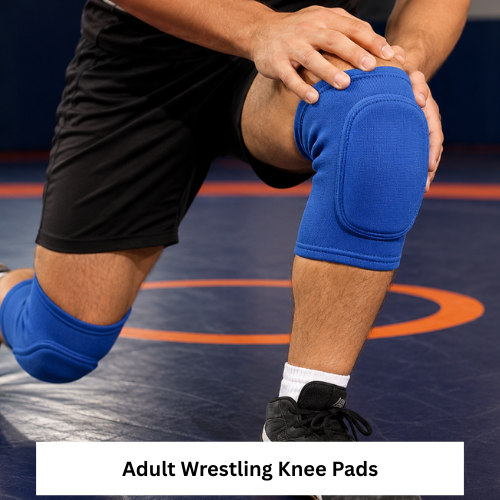
Well-fitted adult wrestling knee pads should remain centered during stance changes, shots, kneeling, sprawls, and scrambles without restricting circulation or knee movement. Adult athletes vary in leg circumference, knee shape, training intensity, and preferred padding level, so age-based or generic sizing is not enough.
Some adults prefer a compact wrestling kneepad over one knee, while others use a pair of padded knee sleeves for training. The best option depends on mat contact, previous irritation, mobility, practice frequency, and team requirements.
Wrestling knee pads buyers should compare sizing instructions, pad profile, sleeve length, fabric recovery, stitching, care requirements, and package quantity before ordering.
How to Fit Adult Wrestling Knee Pads
Adult wrestling knee pads must feel secure without creating pressure behind the knee or limiting deep flexion.
Measure the leg according to the manufacturer’s instructions. This may involve circumference:
- Directly around the kneecap
- A set distance above the knee
- A set distance below the knee
- Around the widest part of the calf
Use a flexible measuring tape and keep it level.
A practical adult wrestling knee pad guide can help athletes understand sizing, padding, sleeve construction, and fit testing before selecting a product.
| Style | Best suited to | Main advantage | Possible limitation | What to verify |
| Low-profile kneepad | Fast practice and competition movement | Less bulk during shots | Less cushioning than thick pads | Kneecap coverage |
| Gel wrestling sleeve | Repeated mat contact | Flexible contoured protection | Can hold heat | Gel position and care |
| Foam padded sleeve | General practice | Lightweight cushioning | Foam may compress over time | Density and recovery |
| Extended compression sleeve | Athletes wanting additional coverage | Covers more of the leg | May roll or feel warm | Sleeve length |
Measure Before Ordering
Do not use waist size, body weight, or height as a substitute for leg measurement.
To measure accurately:
- Stand with the leg relaxed.
- Use the measurement point stated by the brand.
- Keep the tape against the skin without compressing it.
- Measure both legs.
- Record the larger circumference.
- Check whether the chart uses inches or centimetres.
- Review guidance for athletes between sizes.
An adult knee pad size category can help shoppers compare adult-oriented products, but the exact model chart must still be followed.
Do not automatically choose the tighter size. Excess compression may cause discomfort or affect circulation.
Wrestling Sleeve Length
Short sleeves are often cooler and easier to position.
Long sleeves may provide:
- More compression
- Additional skin coverage
- Reduced direct mat friction
- A larger gripping area
However, long sleeves may also:
- Retain heat
- Roll at the top
- Interfere with other gear
- Feel restrictive around the calf
- Take longer to dry
A long adult wrestling knee pad may suit athletes seeking extended coverage, but verify the total length, padding position, sizing, and package quantity.
Neoprene, Stretch Fabric, and Mesh
Material affects fit, heat, drying time, and durability.
Neoprene may provide close compression but can feel warm.
Stretch textile sleeves may feel lighter and dry faster but depend on elastic recovery for stability.
Mesh panels may improve airflow but can create extra seams.
Inspect:
- Interior softness
- Seam placement
- Elastic recovery
- Pad attachment
- Grip bands
- Exterior friction
- Reinforcement around openings
Verify before buying all material, moisture-control, odour-resistant, or antimicrobial claims.
Support Versus Medical Bracing
A wrestling knee pad provides impact and friction protection. It is not automatically a medical brace.
Adult knee sleeves may offer a compressive feel, but they should not replace:
- A prescribed brace
- Injury assessment
- Rehabilitation
- Medical treatment
- Coach-directed return-to-play progression
Athletes experiencing swelling, locking, instability, sharp pain, or reduced movement should seek appropriate medical guidance.
One Pad or a Pair
Some wrestlers wear one knee pad on the lead or frequently contacted knee.
Others wear two for balanced protection.
Before ordering, verify whether the listing contains:
- One sleeve
- One kneepad
- One pair
- Two separate sizes
- Reversible equipment
A product image showing two knees does not always mean two pads are included.
Mat and Uniform Compatibility
Check whether the pad works with:
- Practice shorts
- Compression tights
- Wrestling singlets
- Team rules
- Competition regulations
- Other protective gear
The pad should not expose hard fasteners, loose buckles, sharp edges, or components that could catch another athlete.
A wrestling knee sleeve category can help adults compare sleeve-style protection for training and mat contact.
First Practice Setup
Before a full session:
- Inspect the product.
- Confirm the correct side faces outward.
- Position the pad over the kneecap.
- Smooth wrinkles.
- Perform a deep squat.
- Complete several stance changes.
- Try controlled shots.
- Kneel repeatedly.
- Check circulation.
- Remove and inspect the skin.
The Cliff Keen Impact adult kneepad listing can help buyers compare an adult wrestling design, but verify current sizing, padding, color, quantity, materials, seller, and package contents.
Common Buying Mistakes
Guessing the Size
Adult legs with similar body weight may require different knee pad sizes.
Choosing Maximum Padding
A thick pad may shift more or interfere with movement.
Ignoring Calf Shape
A sleeve may fit around the knee but be too tight or loose at the calf.
Forgetting Pair Quantity
Some products are sold as a single unit.
Using a Medical Brace as Mat Protection
Braces may contain hard parts that are unsuitable for direct wrestling contact.
Keeping a Pad That Rolls
Rolling usually indicates incorrect size, sleeve shape, or material recovery.
Troubleshooting Fit Problems
The Pad Slides Below the Knee
Check size, upper sleeve tension, moisture, pad weight, and whether the leg is between sizes.
The Pad Rotates
The sleeve may be too loose or the padding may not match the athlete’s knee shape.
The Back Bunches
Reposition the sleeve and inspect the length, seam placement, and knee flexion.
The Leg Feels Numb
Remove the pad immediately. Choose a less restrictive fit.
The Padding Separates
Stop using the pad if protection shifts away from the kneecap or stitching opens.
Cleaning and Odour Control
Wash adult wrestling knee pads according to the care label after sweaty use.
Helpful steps include:
- Airing them immediately
- Keeping them out of sealed bags
- Washing with compatible sports gear
- Using approved detergent
- Avoiding unapproved fabric softener
- Air-drying when required
- Reshaping padding
- Drying completely before storage
Do not place high-heat-sensitive foam, gel, or elastic in a dryer unless the instructions permit it.
Conclusion
Adult wrestling knee pads should provide secure kneecap coverage without restricting stance, shots, kneeling, or circulation. Accurate measurement, sport-specific fit testing, appropriate padding, and proper cleaning help athletes choose protection that remains comfortable through regular practice.
FAQ
How tight should adult wrestling knee pads be?
They should stay centered without numbness, tingling, pain, rolling, or deep pressure marks.
Are thicker pads better for adults?
Not always. Thicker padding may add cushioning but can also increase heat and movement restriction.
Should an adult wrestler wear one pad or two?
That depends on training needs, coach guidance, and personal preference.
Can a compression sleeve replace a medical knee brace?
No. A sports sleeve should not replace a brace prescribed for an injury or medical condition.
How often should wrestling pads be washed?
Wash them according to the care label after sweaty sessions and allow them to dry fully.
