

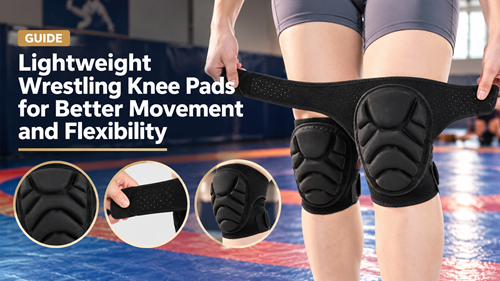

Lightweight wrestling knee pads are designed for athletes who want protection without the bulky feel of a heavily padded sleeve. The goal is not simply to use less material; the pad still needs to cover the kneecap, stay centered, flex naturally, and provide enough cushioning for the wrestler’s usual mat contact.
Mobility-focused gear can be especially useful for wrestlers who rely on quick level changes, fast penetration steps, stand-ups, and repeated scrambles. The trade-off is that thinner padding may feel less forgiving during frequent hard knee drops.
What Makes Wrestling Knee Pads Lightweight
Lightweight wrestling knee pads usually reduce bulk through thinner front padding, lighter sleeve material, shorter coverage, or a combination of those choices. The important question is whether the design still protects the contact area during normal wrestling movement.
Low weight alone does not guarantee comfort. A thin sleeve that slides below the kneecap or bunches behind the knee can be more distracting than a slightly heavier pad that stays centered.
The site’s padded knee sleeve guide helps compare longer compression coverage with a lighter traditional wrestling pad.
Movement, Flexion, and Low-Profile Padding
Low-profile padding can make deep knee flexion feel more natural because there is less material resisting the joint. Wrestlers who move constantly between stance, penetration, kneeling, and recovery positions often notice this difference.
The protective area still has to cover the kneecap. If reducing thickness also reduces useful coverage, the athlete may feel more direct mat pressure during repeated shots.
Competition-focused athletes can compare mobility priorities in the competition wrestling knee pad guide before choosing the slimmest option.
Flexibility Should Not Mean Constant Adjustment
A flexible sleeve should follow the knee without twisting. If the front pad rotates after every scramble, the design is not delivering useful mobility even if it feels light.
Ventilation and Sleeve Stability
Lighter fabrics may hold less heat, but ventilation depends on more than fabric weight. Rear-knee construction, sleeve length, compression, and moisture behavior all affect comfort after the athlete is warm.
Secure fit becomes even more important with a lightweight design because there is less mass helping the front pad stay in place. Test the sleeve after sweat builds, not only when it is dry.
Wrestlers with pressure or skin-sensitivity concerns can compare lighter options with the sensitive-knee protection guide.
Lightweight vs Heavier Protection
The best choice depends on contact pattern. A wrestler who frequently drops hard onto one knee may prefer deeper cushioning, while an athlete who rarely lands directly on the kneecap may value low bulk more.
Practice volume also matters. Thin foam that feels comfortable for a short match may flatten faster during long drilling blocks, while denser padding can feel warmer but provide more repeated-contact comfort.
For high-volume practice decisions, review the practice durability guide alongside the mobility comparison.
| Design Style | Main Benefit | Main Trade-Off | Best Test |
|---|---|---|---|
| Low-profile pad | Less bulk and easier flexion | Less cushioning depth | Shots, sprawls, deep knee bends |
| Long lightweight sleeve | More stable fabric coverage | Can hold more heat | Extended drilling and sweat test |
| Open-back light pad | Rear-knee freedom | Less continuous compression | Squats, stand-ups, repeated flexion |
| Heavier cushioned pad | More repeated-contact comfort | More bulk and warmth | Hard knee drops and mat returns |
A Practical Mobility Test for Lightweight Wrestling Knee Pads
Use movement that actually challenges the knee angle and pad position. A lightweight sleeve should disappear into the athlete’s normal technique rather than creating a new adjustment habit.
Beginners can pair this test with the beginner wrestling knee pad guide to balance mobility with enough protection for developing technique.
- Wear the pad through a normal warm-up
- Perform repeated deep stance changes
- Complete penetration steps on both sides
- Sprawl and recover several times
- Check rear-knee comfort during full flexion
- Note whether the pad rotates after sweat builds
- Compare cushioning on normal mat contact
- Choose the lightest option that still feels protective
Frequently Asked Questions
Are lightweight wrestling knee pads less protective?
They can use less cushioning, but protection depends on pad material, coverage, fit, and the athlete’s contact pattern.
Do low-profile knee pads improve movement?
They can reduce bulk and resistance around the knee, but only if the sleeve stays stable during wrestling.
Are lightweight knee pads better for competition?
They can be useful for match mobility, but event rules, fit, cushioning needs, and athlete preference still matter.
Can thin knee pads be used for hard practice?
Yes for some wrestlers, but frequent direct knee contact may make deeper cushioning more comfortable.
How should a lightweight knee pad fit?
It should stay centered without excessive compression, rolling, bunching, or repeated adjustment.
Use the Lightest Pad That Still Handles Your Real Mat Contact
Lightweight wrestling knee pads work best when low bulk, stable fit, and useful protection are balanced. The goal is freedom of movement without giving up the cushioning the athlete actually needs.
Test the sleeve during shots, sprawls, deep flexion, and sweaty live work. If it stays centered and mat contact remains comfortable, the lightweight design is doing its job.
