

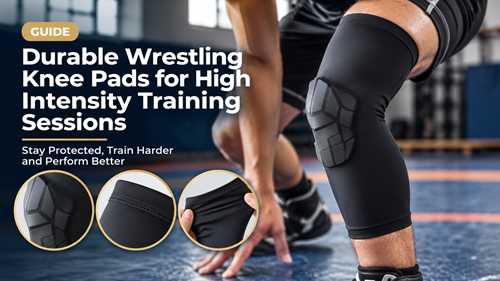

Durable wrestling knee pads must survive more than one hard practice. High-intensity training puts repeated stress on front padding, stretch fabric, seams, elastic bands, and the rear-knee area as athletes shoot, sprawl, scramble, kneel, and wash the gear over and over.
Durability does not mean choosing the thickest or heaviest pad. The best practice equipment keeps its protective shape, returns to position after flexion, tolerates sweat and cleaning, and remains comfortable enough that the wrestler will actually wear it consistently.
What Durability Means in Wrestling Knee Pads
Durable wrestling knee pads need to handle repeated movement without losing alignment. The front pad, sleeve, and elastic edges all work together. If one part weakens, the wrestler may start adjusting the gear even when the cushioning still looks usable.
High practice volume reveals weak construction quickly. Repeated flexion can loosen fabric, mat friction can wear outer surfaces, and sweat can change how the sleeve grips the leg.
The site’s practice knee pad durability guide gives a useful baseline for evaluating gear used several days each week.
Seams, Fabric, and Sleeve Recovery
Inspect seams before the fabric actually tears. Loose threads, separating panels, hard seam edges, and stretched bands can be early signs that the sleeve will not stay stable for much longer.
Fabric should recover after the pad is removed. If the sleeve remains permanently stretched or the top edge rolls every session, the fit may continue to get worse even when the front padding remains intact.
For athletes comparing compression-style gear, the padded knee sleeve guide explains how sleeve length and compression can affect stability and comfort.
Check High-Friction Areas First
Look at the front face of the pad, outer knee edges, lower band, and rear-knee seam. These areas often show wear first because they repeatedly contact the mat or flex against the skin.
Padding Recovery Under Repeated Contact
Padding should rebound after practice. Foam that stays crushed, becomes uneven, or develops hard spots can change the way force is spread across the knee.
Repeated knee drops, shots, and mat returns are better durability tests than squeezing the pad by hand. The athlete should also check whether the protective panel remains centered after the sleeve is wet.
Wrestlers who experience discomfort from repeated contact can compare this with the knee protection guide before assuming that more padding is always the answer.
| Durability Area | What to Inspect | Warning Sign | Why It Matters |
|---|---|---|---|
| Outer fabric | Abrasion and thinning | Holes, rough patches, exposed padding | Mat friction can weaken coverage |
| Seams | Stitching and panel joins | Loose thread or separation | Failure can change pad position |
| Elastic bands | Grip and recovery | Persistent rolling or looseness | Sleeve may start sliding |
| Padding | Shape and rebound | Flat spots or hard edges | Impact protection becomes less consistent |
| Rear knee | Comfort and flexibility | Bunching or cracked fabric | Can interfere with deep flexion |
Washing and Extending Useful Life
Follow the product care label. Harsh heat, aggressive drying, or strong chemicals can weaken elastic and padding materials even when the outside still looks acceptable.
Let the pad dry fully before storing it. Damp gear left compressed inside a bag can develop odor and may age faster. Rotating two pairs can also reduce the pressure to wear one sleeve before it is completely dry.
Competition-focused athletes can use the competition knee pad guide to decide whether one durable practice pad should also serve as match gear.
A High-Intensity Durability Test
Evaluate durable wrestling knee pads across more than one session. A pad may feel excellent on the first day and still lose position or cushioning after repeated use.
Newer athletes can combine this test with the beginner buying guide to avoid choosing toughness at the expense of fit and comfort.
- Photograph or note the pad shape when new
- Use it through a full high-volume drilling session
- Check pad rotation after sweat builds
- Inspect seams immediately after practice
- Wash and dry it according to the label
- Compare elastic recovery before the next session
- Check for flat spots or hard padding edges
- Replace the pad when structure no longer recovers
Frequently Asked Questions
How long should durable wrestling knee pads last?
There is no universal lifespan. Training volume, mat friction, washing, construction, and fit all affect wear.
Does thicker padding last longer?
Not always. Density, material quality, stitching, and how the pad is used matter more than thickness alone.
Can a stretched sleeve still protect the knee?
The front pad may still cushion, but poor sleeve tension can let it move away from the kneecap.
Should knee pads be washed after every practice?
Follow the product label and hygiene needs. Frequent sweaty use generally requires regular cleaning and complete drying.
When is it time to replace a practice knee pad?
Replace it when fit, padding shape, seams, or elastic recovery no longer perform reliably.
Durability Is Repeatable Performance, Not Just Tough Fabric
Durable wrestling knee pads should keep their shape, position, and comfort across repeated drilling, live work, washing, and drying. Long life is useful only when protection remains centered on the knee.
Inspect the gear regularly, follow care instructions, and replace it before stretched fabric or damaged padding becomes a practice distraction. Durable equipment should feel dependable session after session.
