

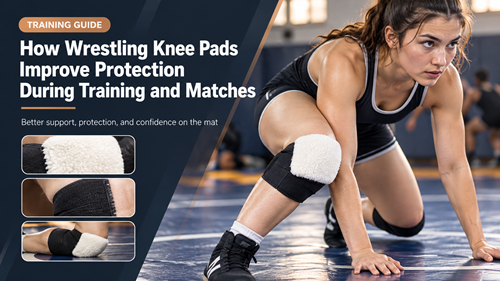

Wrestling knee pads can reduce direct mat contact on the kneecap, add a cushioning layer during shots and scrambles, and help athletes stay comfortable through repeated drilling. The useful benefit comes from the complete system: padding, sleeve tension, coverage, rear-knee comfort, and how well the pad stays centered once sweat and fast movement begin.
Wrestlers, coaches, MMA athletes, and other martial artists should treat knee protection gear as supportive equipment rather than a substitute for safe technique or medical care. A pad that slides, rolls, pinches, or shifts off the knee can become a distraction even if the foam itself feels thick.
How Wrestling Knee Pads Improve Protection
Wrestling knee pads improve protection mainly by putting a controlled layer between the kneecap and the mat. That layer can spread pressure across a larger area and reduce the sharp feeling of repeated knee drops, penetration steps, and mat returns.
Protection is not only about thick foam. A smaller low-profile pad that stays directly over the kneecap can be more useful than a bulky pad that rotates to the side. The athlete should be able to kneel, shoot, sprawl, and recover without the protective area drifting away from the point of contact.
For athletes still learning what to look for, the site’s beginner wrestling knee pad guide explains how fit, comfort, and protection work together before moving into higher-intensity practice.
Impact Control During Shots and Mat Contact
Repeated mat contact is one of the clearest tests for wrestling equipment. A good pad should soften contact without creating so much bulk that the knee feels slow or unstable. Dense foam, molded padding, gel, or layered cushioning can all work when the shape matches the wrestler’s movement.
Mat surface matters too. A fresh competition mat, an older practice mat, and a home training surface can feel very different under the same knee pad. Athletes who spend more time on hard or worn mats may value deeper cushioning, while wrestlers focused on quick competition movement may prefer a slimmer profile.
The existing knee protection guide for sensitive knees is useful when comfort, pressure, and irritation matter as much as impact control.
Padding Should Recover After Repeated Contact
Press the pad after a hard drilling block and compare its shape with the beginning of practice. Foam that stays permanently flattened, develops hard edges, or shifts inside the sleeve can provide less consistent protection over time.
Fit Stability Through Scrambles and Matches
Secure fit keeps the protective panel where it is needed. The sleeve should feel snug enough to resist rotation but not so tight that it causes numbness, strong pressure marks, or restricted knee flexion.
Sweat changes fit. A sleeve that feels perfect when dry may loosen, slide, or bunch after twenty minutes. The correct test is movement under real practice conditions, not a standing fit check in the locker room.
Compare compression-style options with the site’s padded knee sleeve guide when deciding between a traditional pad and a longer supportive sleeve.
Training Needs vs Match Needs
Practice usually creates more total repetitions than competition. Daily drilling can expose seams, fabric stretch, pad recovery, and heat buildup long before a short match does. Durable practice gear should tolerate washing, repeated flexion, and regular mat friction.
Match gear should feel predictable. Athletes need clean movement with minimal adjustment during stance changes, shots, sprawls, and scrambles. Competition rules and team requirements should also be checked before match day.
The dedicated competition wrestling knee pad guide covers the extra checks that matter when tournament readiness is the priority.
| Use Case | Main Priority | What to Test | Common Trade-Off |
|---|---|---|---|
| Daily drilling | Durability and comfort | Pad recovery, seams, heat, wash response | More durable builds can feel warmer |
| Takedown practice | Direct impact control | Knee drops, penetration steps, pad rotation | Thicker padding may add bulk |
| Live goes | Stable movement | Slipping, bunching, rear-knee comfort | More compression can increase heat |
| Competition | Low distraction | Rules, fit, mobility, final warm-up test | Very light designs may reduce cushioning |
A Practical Wrestling Knee Pad Protection Test
Use one controlled practice to judge whether the pad actually improves protection without interfering with technique. Wear the normal singlet, socks, shoes, and warm-up layers so the test matches real training.
For practice-specific durability checks, use the wrestling practice knee pad guide alongside this movement test.
- Confirm the pad starts centered over the kneecap
- Perform repeated stance and level changes
- Complete controlled penetration-step repetitions
- Sprawl and recover several times
- Kneel on both knees and compare pressure
- Check whether the sleeve rotated after sweat builds
- Inspect rear-knee comfort and seam pressure
- Recheck pad shape after the session
Frequently Asked Questions
Do wrestling knee pads prevent every knee injury?
No. They can reduce mat contact and friction, but they cannot prevent every injury or replace coaching, conditioning, and medical care.
Should thicker wrestling knee pads always be chosen?
No. Thicker padding can increase cushioning but may also add heat, bulk, or movement resistance. Fit and placement matter just as much.
Can one knee pad be enough for wrestling?
Some wrestlers protect the knee that contacts the mat most often, while others prefer balanced coverage on both knees. Practice movement should guide the decision.
How tight should a wrestling knee pad feel?
It should feel secure without numbness, sharp pressure, circulation concerns, or restricted knee flexion.
When should a worn wrestling knee pad be replaced?
Replace it when the sleeve no longer stays positioned, padding remains flattened, seams fail, or the material no longer recovers after use.
Choose Protection That Stays Centered While You Wrestle
Wrestling knee pads are most useful when cushioning, fit, and movement work together. The athlete should notice less direct mat pressure without needing repeated adjustments during drills or matches.
Test the gear progressively, inspect it after hard sessions, and replace it when padding or sleeve tension changes. Reliable protection is the pad that remains in the correct place when wrestling becomes fast and unpredictable.
